Taking Care of Graphic Tee Pieces: Washing and Storage Tips for Denim Tears Pieces

After that initial wash, a printed cotton t-shirt is entirely dependent on the attention it gets. Denim Tears garments carry cotton wreath graphics, screen-printed graphics, and heavyweight jersey construction that react quite differently to heat, agitation, and folding than a basic basic tee. Cracking hits the print, the collar loses shape, and the cotton loses its dense hand-feel if it's handled like a throwaway tee. Treat it with a bit more attention and the same shirt can look sharp for years, through dozens of wears and washes. This guide breaks down exactly how to wash, dry, fold, and store these pieces so the print remains undamaged and the cotton maintains its structure.
There's no need for fancy cleaning products or pricey gear. What it takes is consistency: the same wash temperature, the same drying method, the same folding habit, every single time. Printed tees fail early mostly because of irregular habits — one hot wash, one high-heat dry cycle, one season crammed on a hanger — not because the garment was poorly made. Below is a straightforward, reusable method.
Making Sense of the Fabric and Printing Method
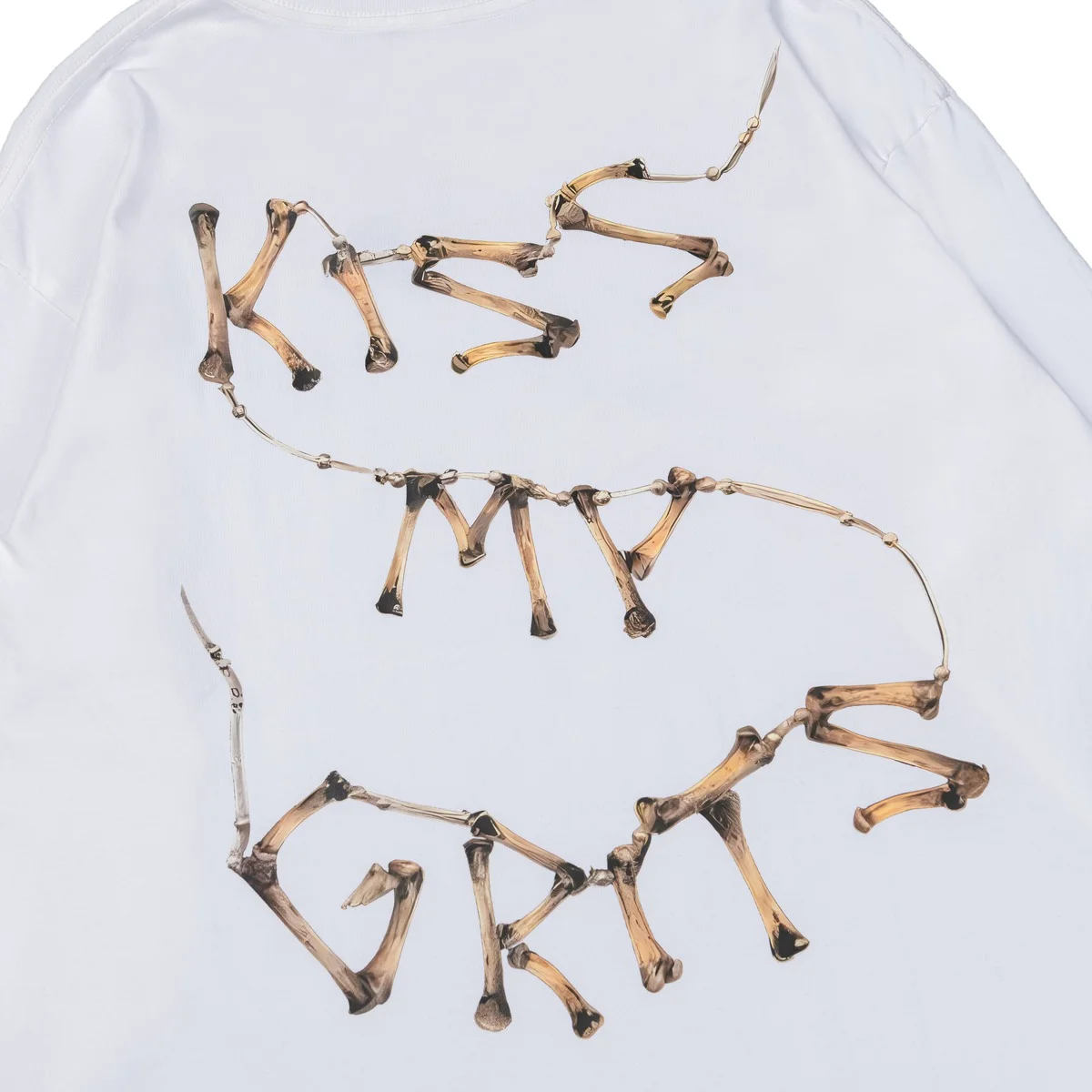
Most printed cotton t-shirts, including heavyweight streetwear pieces, use 100% cotton jersey in the 180–240 GSM range. Denser cotton of this type holds its shape better than thin 140 GSM tees, but it also soaks up and holds onto water for a longer stretch, which has an impact on drying time and shrinkage risk. The printed designs are typically applied through screen printing, and sometimes puff printing for a raised, textured finish. Since it doesn't fully penetrate the fibers rather than soaking in completely, warmth and rubbing end up as the two enemies behind splitting, fading, and lifting as time goes on.
Raised puff-print graphics come with one notable concern: elevated temperatures can flatten or melt the texture irreversibly, so a shirt with raised graphics needs softer care than one with a flat-printed design. Embroidered patches or appliqué work, if present on a piece, add another layer of concern, since embroidery threads can snag, loosen, or fray denim tears sweatshirt in a washing machine's agitator cycle. Every subsequent decision — how hot the wash is included, down to whether it goes in a dryer at all — should be shaped by knowing what's actually on your shirt: flat screen print, puff print, embroidery, or some combination.
Over time, repeated hot washing erodes the weave of the fabric, producing that sheer, flimsy, faded look typical of low-quality tees. Thicker cotton weight delays this deterioration but does not eliminate it. Proper care isn't meant to keep a shirt looking brand-new indefinitely — cotton tees are expected to fade and soften somewhat over time — but to slow deterioration so the design and fit hold up for as long as the material itself does.
Wash Care: Temperature, Cycle, and Detergent Choices
Cool-temperature water, specified as 30°C (86°F) or below, is by far the most useful practice for protecting both color and print. High-temperature washing hastens ink cracking on screen prints and worsens shrinkage in cotton by making the fibers pull tighter. Warm water within the 30–40°C range works fine for shirts that are only lightly soiled, though it shouldn't be the go-to choice. Make it a habit to look for a specific care label on the piece, since Denim Tears has used different fabric weights and treatments across drops, and the label is tailored to the true build of that garment.
Before it goes in the wash, the shirt should always be turned inside out. That one simple step shields the printed surface from rubbing directly against zippers, buttons, or other items in the load — and it's the step most people skip when caring for graphic tees. Use a mild, low-agitation cycle rather than a standard or intensive setting; the reduced agitation means less wear on both the print and the seams. Keep graphic tees out of loads with denim, hardware-laden pieces, or Velcro-fastened items, since those materials abrade printed surfaces during the spin cycle.
Detergent choice matters more than most people assume. A bleach-free, brightener-free liquid detergent is the better choice, since powder detergents can leave granules that don't fully dissolve in cold water and end up rubbing against the print. Steer clear of fabric softener when it comes to printed tees — the film it leaves behind can mute the print's color over repeated washes and block cotton's natural ability to breathe. Wash the shirt every 2–3 wears instead of after each individual wear; cotton holds up structurally longer when it's not run through a machine cycle constantly, and most graphic tees don't need washing after one wear unless there's visible staining.
Proper Drying That Keeps the Print Intact
Air drying flat is hands-down the top technique for protecting both shape and print quality. Place the shirt on a clean, dry towel, re-mold it to its natural shape, and let it dry away from direct sunlight, which can fade both the dyed fabric and the print design over several hours of UV exposure. Draping a wet cotton tee on a hanger causes the shoulder area to stretch out under the fabric's own dampened weight, creating small bumps at the shoulder seams that don't fully reverse once dry.
On occasions when a dryer can't be avoided, opt for the gentlest heat setting — usually denoted as "low" — and take it out while not yet fully dry, rather than letting the entire cycle run. Within the first 10–15 washes, running the dryer hot for a complete cycle will wear out a screen print faster than anything else. Especially puff prints should never be run through a dryer on moderate-to-high heat settings, since the elevated design surface can flatten permanently in a single cycle.
Based on how heavy the material is, the drying duration varies: a lightweight 160 GSM tee needs roughly 2–3 hours to air-dry indoors, whereas a heavyweight 220+ GSM piece may take 5–6 hours, according to humidity and airflow. Being patient in this step pays off directly in longevity. Don't twist and squeeze a wet cotton tee to speed up drying, since wringing the fibers under tension distorts the weave and can leave permanent creases in heavier cotton that won't smooth away.
Storage, Folding, and Hanging Practices
Folding garments is usually better than hanging them up for graphic tees, because suspending on a hanger over time stretches the neckline and shoulders under the fabric's own weight, especially with heavier cotton fabric. Fold along the garment's seam lines, with the print facing inward, if possible, to limit direct contact and friction between the print and other garments stacked on top. Avoid tight, packed-in stacking in a drawer; leaving a little slack cuts down the heavy creases that appear when heavy cotton sits packed tightly for weeks.
Pieces used infrequently, or stored for a season, benefit from acid-free tissue placed between folds, which prevents color bleed between garments and minimizes creasing in the long run.
For long-term storage, climate plays a key role. Because cotton fabric tends to develop mildew and musty odors in damp conditions, a dry closet or drawer — preferably kept below 60% relative humidity — is a safer bet than a damp basement or garage. As an alternative to mothballs, lavender sachets or cedar blocks control moisture and pests without leaving behind chemical residue on the fabric — by contrast, mothballs, with their strong chemical smell, soak into cotton fibers and are difficult to wash out completely.
Vacuum-sealed bags for storage, though they save room, fall short for cotton graphic pieces that you plan to wear again shortly, given that prolonged compression over time can lock lasting creases into both the material and its graphic. They only make sense for true long-term archival storage where the tee will sit untouched for a year or longer.
At-a-Glance Overview: Care Methods and Their Impact
| Care Method | Graphic Durability | Fabric Shape Retention | Recommended Frequency |
|---|---|---|---|
| Inside-out cold wash with flat air drying | High — minimal cracking over 50+ washes | Excellent | After every 2–3 wearings |
| Warm-water wash followed by low-heat tumble drying | Fair — some fading after 20–30 washes | Decent, with a chance of slight shrinkage | Every time it's worn, as required |
| High-heat wash and high-heat machine drying | Low — cracking often visible within 10–15 washes | Weak — visible shrinkage along with shoulder deformation | Not advised |
| Letting a soaked piece hang-dry on a hanger | Fair, with little direct bearing on the graphic itself | Subpar — shoulder and neckline stretching | Not suitable for soaked pieces |
Daily Practices That Help a Tee Last Longer
Small daily habits matter as much as the wash cycle itself. Alternate among several tees rather than relying on a single shirt over and over in a brief period, given that giving cotton fibers 24–48 hours to fully recover their shape between wears cuts down on lasting stretch at high-strain spots such as the collar and underarms. Address small marks on the spot with cold water and a touch of detergent rather than letting them sit until a full wash cycle, because recent marks are much easier to remove than stains that have already set and it spares you an extra full laundering.
Don't run the iron directly across a graphic print; should ironing be needed, flip the tee inside out and use a low-heat cotton setting, or place a thin cloth between the iron and the print to stop the iron's heat from touching the printed ink directly. Underarm areas gradually collect deodorant and natural body oils and can discolor lighter cotton fabrics with a yellow tint, so that region calls for extra attention in the wash instead of just a fast rinse.
Lastly, watch for labeling and any particular guidance included with a specific piece, because fabric weights and print techniques can vary between collections. Spending a few extra minutes on care each wash is a modest trade-off for a graphic tee that still looks crisp two or three years down the line, retaining the color, fit, and crisp graphic that originally made it worth the purchase.
おすすめ動画
![Kraken даркнет market — сделки и регистрация на onion площадке]() Kraken даркнет market — сделки и регистрация на onion площадке
![拘束した巨乳OLのデカ乳首をピアノ線で縛り上げながら電マ責め調教]() 拘束した巨乳OLのデカ乳首をピアノ線で縛り上げながら電マ責め調教
![Официальное зеркало darknet площадки kraken — onion доступ]() Официальное зеркало darknet площадки kraken — onion доступ
![Best Betting Apps Canada 2026: Top App-Exclusive Bonuses]() Best Betting Apps Canada 2026: Top App-Exclusive Bonuses
![kraken — анонимный вход: мосты, прокси, зеркала]() kraken — анонимный вход: мосты, прокси, зеркала
![【素人】ムッチリボディOLの休日はのんびりオナニー❤️]() 【素人】ムッチリボディOLの休日はのんびりオナニー❤️
![デリヘルのヤリマン巨乳ギャルに連続生中出し]() デリヘルのヤリマン巨乳ギャルに連続生中出し
![【朝比奈ななせ】スタイル抜群ギャルと最高の中出しセックス]() 【朝比奈ななせ】スタイル抜群ギャルと最高の中出しセックス
![The State of PPC Arbitrage in 2026]() The State of PPC Arbitrage in 2026
![Мега Маркет без смс и регистрации — но с анонимностью и PGP]() Мега Маркет без смс и регистрации — но с анонимностью и PGP
![ネトラレ願望がある痴女人妻が男友達からネトラレレイプで激イキ!]() ネトラレ願望がある痴女人妻が男友達からネトラレレイプで激イキ!
![Panduan Mauslot Login: Semua yang Perlu Kamu Ketahui agar Tidak Tertunda]() Panduan Mauslot Login: Semua yang Perlu Kamu Ketahui agar Tidak Tertunda
![Где взять рабочую onion ссылку на Рутор форум]() Где взять рабочую onion ссылку на Рутор форум
![友達の巨乳女子大生彼女の誘惑に負けて危ないネトラレセックス]() 友達の巨乳女子大生彼女の誘惑に負けて危ないネトラレセックス
![The Advantages Of Kasyno Bonus Bez Depozytu]() The Advantages Of Kasyno Bonus Bez Depozytu
![MONOPOLY Casino & Sports: Play Real Money Slots, Bet & More]() MONOPOLY Casino & Sports: Play Real Money Slots, Bet & More